The dream of human flight is as old as civilization itself, a persistent yearning reflected in myths like Icarus and the pioneering efforts of aviators like the Wright brothers. Paragliding, a relatively young yet rapidly evolving air sport, offers one of the purest and most Soaring with the Wind: accessible forms of this ancient dream, allowing individuals to soar through the skies like birds, suspended beneath a fabric wing with no rigid primary structure. This article delves into the captivating world of paragliding, exploring its fascinating history, essential equipment, flying techniques, safety The Ultimate Guide to Paragliding measures, and the unparalleled thrill that keeps enthusiasts coming back for more.
The Ultimate Guide to Paragliding

A Brief History of Soaring
Paragliding’s roots trace back to the 1960s, evolving from developments in parachute design rather than traditional aviation. The key breakthrough came from American engineer Domina Jalbert, who in 1952 and later in 1957 with the “Parafoil,” patented a multi-cell, ram-air parachute design that could be steered and provided a better glide ratio.
In the 1960s, French engineer Pierre Lemoigne advanced the concept with “slope parachuting,” demonstrating that these steerable parachutes could be launched from hillsides rather than dropped from aircraft. The sport as we know it today was officially born in June 1978, when three French friends—Jean-Claude Bétemps, André Bohn, and Gérard Bosson—launched from the Pointe du Pertuiset in Mieussy, France, and successfully glided down to a football field 1,000 meters below. They coined the term parapente (French for “paraglider,” literally “along the slope”).
The 1980s saw the formalization of the sport with the establishment of the first paragliding schools and national organizations. Equipment rapidly improved, and the first official FAI World Paragliding Championship was held in Austria in 1989. Since then, continuous technological advancements in materials and design have made modern paragliders safer, more stable, and more forgiving of pilot error, expanding the sport’s global reach and accessibility.
The Gear: Wings, Harnesses, and Instruments
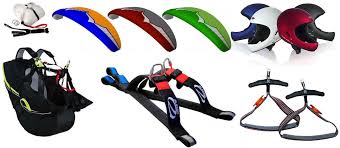
Paragliding gear is a marvel of lightweight engineering, designed for portability and function. The entire kit packs into a rucksack, allowing pilots to travel easily to launch sites.
The Wing (Canopy): The core of the equipment is the fabric wing, a ram-air airfoil made of durable, non-porous ripstop nylon or polyester. Internal supporting ribs divide the wing into cells, which inflate with air entering through vents in the front (leading edge) as the pilot moves forward. This air pressure maintains the wing’s aerodynamic shape, providing lift.
The Harness: The pilot sits in a comfortable harness, which connects them to the wing via strong suspension lines and risers. Modern harnesses offer excellent support and protection, often incorporating foam or inflatable (airbag) protectors to cushion potential impacts. A vital safety feature, a reserve (emergency) parachute, is typically packed into a compartment in the harness.
Instruments: While not strictly essential for a basic glide, instruments are crucial for maximizing flight time and ensuring safety. A variometer (vario) is key, emitting audio signals and/or a visual display to indicate vertical speed (rate of climb or descent), helping pilots locate and stay within rising columns of air (thermals). GPS units track flight paths, aid navigation, help avoid restricted airspace, and provide location data for retrieval teams. Radios are used for communication between pilots and ground crew.
The Art of Flight: Techniques and Thrills
Paragliding involves three main phases: launch, flight, and landing.
Launching and Soaring
Launches typically occur from a slope or mountain edge. In low wind, a forward launch requires the pilot to run forward, allowing air pressure to inflate the wing and lift them off the ground. In stronger winds, a reverse launch is often used, where the pilot faces the wing, inflates it, checks the lines, and then turns around to run into the wind and take off. Towed launches are also possible in flat areas, using a winch system.
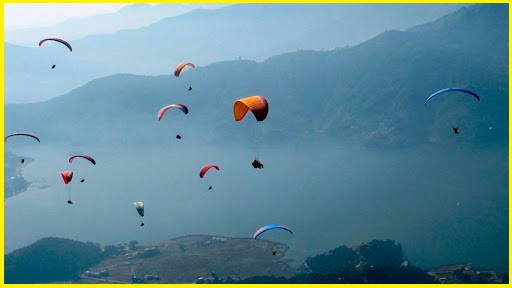
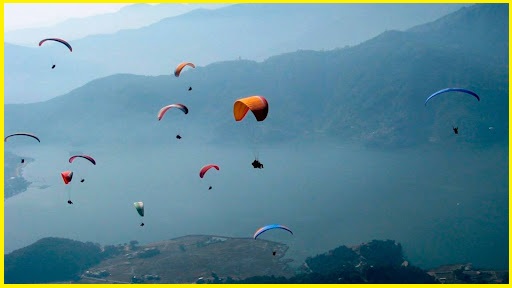
Once airborne, the real skill lies in harnessing natural lift sources. Ridge soaring involves using the upward deflection of wind over a fixed object like a dune or mountain ridge to stay airborne. Thermal flying is perhaps the most celebrated technique, where pilots seek out rising columns of warm air (thermals) and circle within their core to gain altitude, often climbing thousands of meters. This allows for flights lasting hours and covering vast cross-country distances, sometimes hundreds of kilometers. The experience is often described as serene, offering an unparalleled sense of freedom and a silent, bird’s-eye view of the landscape below.
Landing and Control
Pilots steer their gliders using brake lines attached to the trailing edge of the wing and by shifting their weight in the harness. Landing requires precision. Pilots follow a specific traffic pattern around the landing zone, managing their height with techniques like “big ears” (folding in the wingtips to increase descent rate) to reach the correct height. The final approach involves lining up into the wind and flaring (applying brakes just above the ground) to stall the wing and land gently on their feet.
Safety: The Paramount Concern
While paragliding is an extreme sport and inherently involves risks, it is considered very safe when practiced responsibly with proper training and equipment in suitable weather conditions. Safety is paramount and depends heavily on pilot judgment and ongoing training.
Key safety factors include:
Certified Training: Rigorous training through certified schools is essential for learning theory, ground handling, flight techniques, and emergency procedures.
Understanding Weather: A deep understanding of weather conditions, wind patterns, and the ability to read the sky is perhaps the most critical skill. Unsuitable conditions, such as strong turbulence or thunderstorms, significantly increase risk.
Equipment Maintenance: Regular inspection and maintenance of the wing, lines, harness, and reserve parachute are crucial.
Pilot Skill and Judgement: Knowing when conditions are beyond one’s skill level and having the discipline to not fly is vital.
Popular Locations and the Future
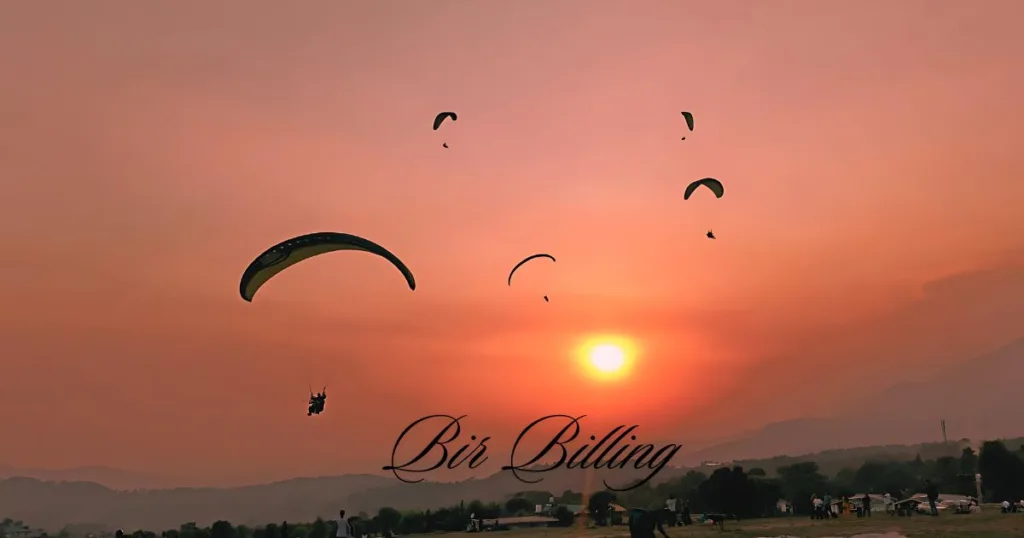
Paragliding is enjoyed worldwide. Renowned locations include the Alps in Europe, Bir Billing in India, Oludeniz in Turkey, and coastal spots like Cape Town, South Africa, each offering unique and breathtaking flying experiences.
The sport continues to evolve, with ongoing innovations in materials making gliders even lighter, more efficient, and safer. Disciplines like hike-and-fly (hiking up a mountain and flying down), aerobatics, and paramotoring (using an engine for propulsion) are expandingThe dream of human flight is as old as civilization itself, a persistent yearning reflected in myths like Icarus and the pioneering efforts of aviators like the Wright brothers. Paragliding, a relatively young yet rapidly evolving air sport, offers one of the purest and most Soaring with the Wind: accessible forms of this ancient dream, allowing individuals to soar through the skies like birds, suspended beneath a fabric wing with no rigid primary structure. This article delves into the captivating world of paragliding, exploring its fascinating history, essential equipment, flying techniques, safety The Ultimate Guide to Paragliding measures, and the unparalleled thrill that keeps enthusiasts coming back for more.
A Brief History of Soaring
Paragliding’s roots trace back to the 1960s, evolving from developments in parachute design rather than traditional aviation. The key breakthrough came from American engineer Domina Jalbert, who in 1952 and later in 1957 with the “Parafoil,” patented a multi-cell, ram-air parachute design that could be steered and provided a better glide ratio.
In the 1960s, French engineer Pierre Lemoigne advanced the concept with “slope parachuting,” demonstrating that these steerable parachutes could be launched from hillsides rather than dropped from aircraft. The sport as we know it today was officially born in June 1978, when three French friends—Jean-Claude Bétemps, André Bohn, and Gérard Bosson—launched from the Pointe du Pertuiset in Mieussy, France, and successfully glided down to a football field 1,000 meters below. They coined the term parapente (French for “paraglider,” literally “along the slope”).
The 1980s saw the formalization of the sport with the establishment of the first paragliding schools and national organizations. Equipment rapidly improved, and the first official FAI World Paragliding Championship was held in Austria in 1989. Since then, continuous technological advancements in materials and design have made modern paragliders safer, more stable, and more forgiving of pilot error, expanding the sport’s global reach and accessibility.
The Gear: Wings, Harnesses, and Instruments
Paragliding gear is a marvel of lightweight engineering, designed for portability and function. The entire kit packs into a rucksack, allowing pilots to travel easily to launch sites.
The Wing (Canopy): The core of the equipment is the fabric wing, a ram-air airfoil made of durable, non-porous ripstop nylon or polyester. Internal supporting ribs divide the wing into cells, which inflate with air entering through vents in the front (leading edge) as the pilot moves forward. This air pressure maintains the wing’s aerodynamic shape, providing lift.
The Harness: The pilot sits in a comfortable harness, which connects them to the wing via strong suspension lines and risers. Modern harnesses offer excellent support and protection, often incorporating foam or inflatable (airbag) protectors to cushion potential impacts. A vital safety feature, a reserve (emergency) parachute, is typically packed into a compartment in the harness.
Instruments: While not strictly essential for a basic glide, instruments are crucial for maximizing flight time and ensuring safety. A variometer (vario) is key, emitting audio signals and/or a visual display to indicate vertical speed (rate of climb or descent), helping pilots locate and stay within rising columns of air (thermals). GPS units track flight paths, aid navigation, help avoid restricted airspace, and provide location data for retrieval teams. Radios are used for communication between pilots and ground crew.
The Art of Flight: Techniques and Thrills
Paragliding involves three main phases: launch, flight, and landing.
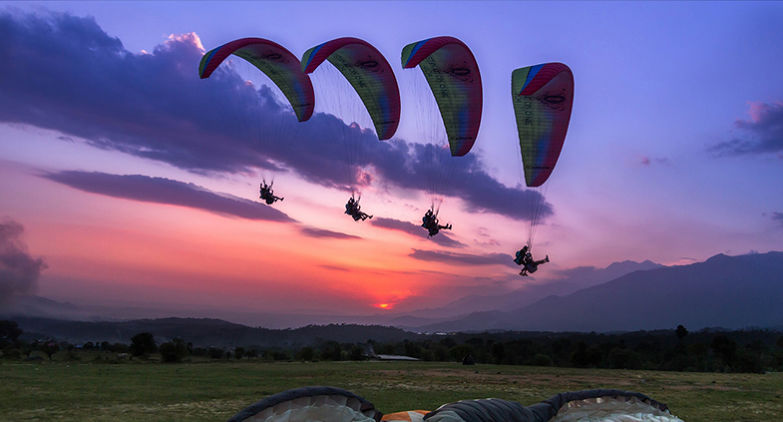
Launching and Soaring
Launches typically occur from a slope or mountain edge. In low wind, a forward launch requires the pilot to run forward, allowing air pressure to inflate the wing and lift them off the ground. In stronger winds, a reverse launch is often used, where the pilot faces the wing, inflates it, checks the lines, and then turns around to run into the wind and take off. Towed launches are also possible in flat areas, using a winch system.
Once airborne, the real skill lies in harnessing natural lift sources. Ridge soaring involves using the upward deflection of wind over a fixed object like a dune or mountain ridge to stay airborne. Thermal flying is perhaps the most celebrated technique, where pilots seek out rising columns of warm air (thermals) and circle within their core to gain altitude, often climbing thousands of meters. This allows for flights lasting hours and covering vast cross-country distances, sometimes hundreds of kilometers. The experience is often described as serene, offering an unparalleled sense of freedom and a silent, bird’s-eye view of the landscape below.

Landing and Control
Pilots steer their gliders using brake lines attached to the trailing edge of the wing and by shifting their weight in the harness. Landing requires precision. Pilots follow a specific traffic pattern around the landing zone, managing their height with techniques like “big ears” (folding in the wingtips to increase descent rate) to reach the correct height. The final approach involves lining up into the wind and flaring (applying brakes just above the ground) to stall the wing and land gently on their feet.
Safety: The Paramount Concern
While paragliding is an extreme sport and inherently involves risks, it is considered very safe when practiced responsibly with proper training and equipment in suitable weather conditions. Safety is paramount and depends heavily on pilot judgment and ongoing training.
Key safety factors include:
Certified Training: Rigorous training through certified schools is essential for learning theory, ground handling, flight techniques, and emergency procedures.
Understanding Weather: A deep understanding of weather conditions, wind patterns, and the ability to read the sky is perhaps the most critical skill. Unsuitable conditions, such as strong turbulence or thunderstorms, significantly increase risk.
Equipment Maintenance: Regular inspection and maintenance of the wing, lines, harness, and reserve parachute are crucial.
Pilot Skill and Judgement: Knowing when conditions are beyond one’s skill level and having the discipline to not fly is vital.
Popular Locations and the Future of Paragliding
Paragliding is enjoyed worldwide. Renowned locations include the Alps in Europe, Bir Billing in India, Oludeniz in Turkey, and coastal spots like Cape Town, South Africa, each offering unique and breathtaking flying experiences.
The sport continues to evolve, with ongoing innovations in materials making gliders even lighter, more efficient, and safer. Disciplines like hike-and-fly (hiking up a mountain and flying down), aerobatics, and paramotoring (using an engine for propulsion) are expanding the horizons of what is possible.
Paragliding is more than just an adventure sport; it is a community, a passion, and a unique way to experience our world from a truly liberating perspective. The sky is no longer a limit, but a playground for those who dare to spread their wings.
Paragliding is more than just an adventure sport; it is a community, a passion, and a unique way to experience our world from a truly liberating perspective. The sky is no longer a limit, but a playground for those who dare to spread their wings.